We are delighted to share highlights from the SWICCOMAS Annual Event 2026, which took place on Friday, 13 February 2026, at the University of Bern.
This year marked a milestone for SWICCOMAS, as we introduced for the first time an extended format centered around Early-Stage Researcher talks and poster presentations from computational mechanics groups across Switzerland. The strong engagement, excellent scientific quality, and vibrant discussions confirmed the value of this initiative.
📌 Event Highlights
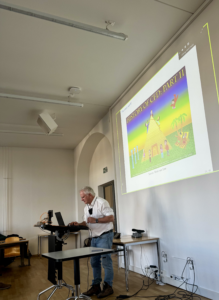
Distinguished Lecture
The event opened with the 2026 Distinguished Lecture delivered by Prof. Rémi Abgrall from the University of Zurich, who presented cutting-edge insights in computational science.
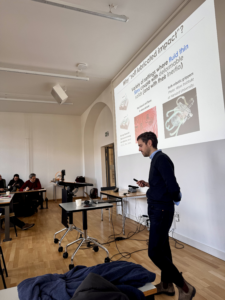
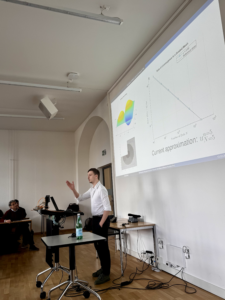
Early-Stage Researcher Talks
The program featured presentations from doctoral researchers and postdoctoral scholars across SWICCOMAS institutions, covering topics including:
- Multiscale mechanics and numerical methods
- Scientific computing and machine learning
- Uncertainty quantification and data-driven methods
- High-performance computing and digital modeling
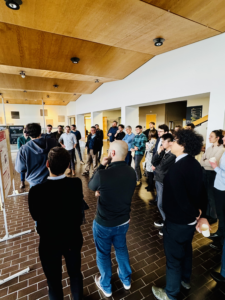
Poster Session & Networking
The day concluded with a lively poster session and networking reception, fostering meaningful exchange among participants and strengthening the Swiss computational mechanics community.
🎉 Poster Competition Awards
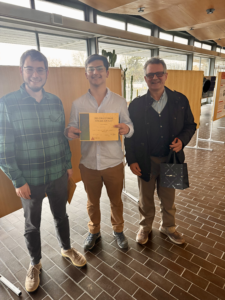
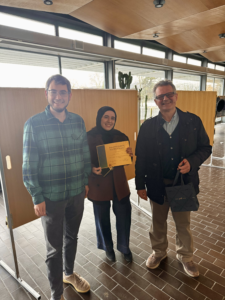
We warmly congratulate the winners of this year’s SWICCOMAS Poster Competition:
🥇 1st Place | Israa Fakih (PSI / EPFL)
Efficient QR-based Column Subset Selection through Randomized Sparse Embeddings
🥈 2nd Place | Raúl Lazo Molina (ETH Zürich)
Beyond the linear limit: A tale of a crack undergoing large deformations
We would like to express our sincere gratitude to our local host, Prof. Thomas Wihler from the University of Bern, for providing an outstanding venue and creating a welcoming environment that enabled fruitful scientific exchange.
We also thank all participants for their enthusiasm and active involvement. This year’s experience clearly demonstrated that structured opportunities for cross-group exchange among doctoral researchers and postdocs in computational mechanics are both needed and impactful. We look forward to further refining and expanding this format in future editions.